Showing posts with label Hyundai. Show all posts

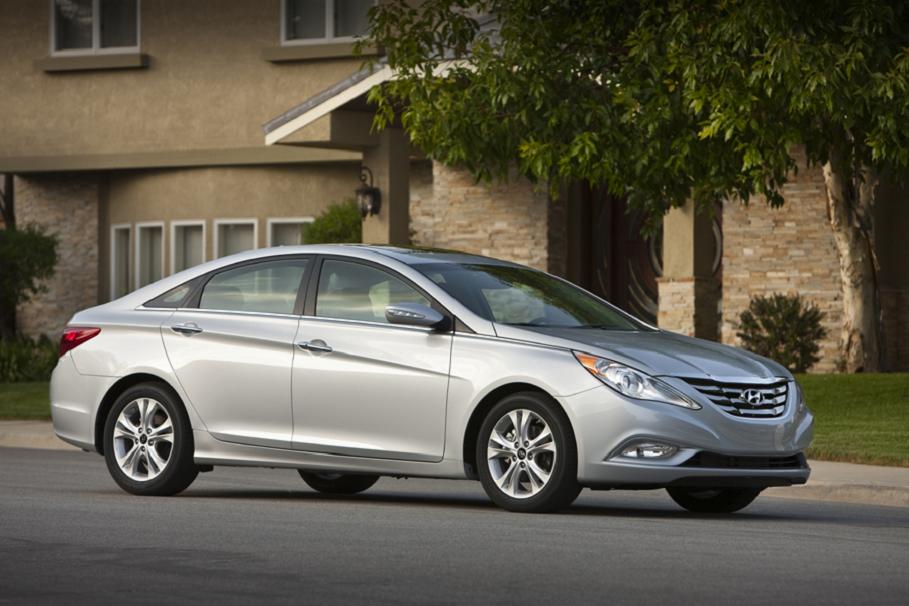
Hyundai Sonata

Remember when Honda was the sole four-cylinder holdout in the mid-size sedan market? The company insisted that there was no need for the extra thirst of a V6 in the Accord, despite the demands of a horsepower-hungry US market. These days, there's an Accord V6, but for 2011 the Hyundai Sonata is doing without a six-cylinder version.

The move simplifies the lineup, but it's not the only motivation. Recent advances in engine technology have made a four-cylinder a viable alternative to a V6, and considering the growing role that fuel efficiency is playing in purchase decisions, Hyundai is gambling that more mid-size sedan buyers won't mind that the Sonata is missing a couple of cylinders.

Try to picture a 2010 Sonata. Unless you own one, or your beloved uncle was killed by one, you can't can you? That's why there's new, more "emotional" styling to go with the rethought powertrain philosophy. Strong, expressive body lines dominate the new Sonata's look. The hood's curves carry down into the bumper, while bulges at each side grow out into a beltline marked with a distinctive chrome spear that carries into the headlights. The body side echoes this curve with a deep character line. The Sonata's new silhouette is similar to the current European "coupe-sedan" look, though the car was penned in Irvine, California. Complainers will whine about a new era of "jellybean" cars. Ignore 'em. The Sonata looks good.

The interior is similarly appointed to impress. The Sonata's new swept-away dash has several textures and looks like it belongs in a more expensive car. If Hyundai's work with the instrument panel is anything to go by, the days of the indifferently designed corporate dashboard are a thing of the past. The new Sonata's two-pod instrument panel features clever off-kilter curves that could've come from a concept car. The climate controls uses a silhouette-type interface reminiscent of that used by Volvo, and Bluetooth connectivity is standard. And all of that's just in the base model. Moving up the price scale, the Sonata Limited gets a pushbutton start, heated front and rear seats, and rear seat air vents. USB and iPod jacks are available, as are a 400-watt Infinity sound system, HD radio and a special wine-colored leather interior. A navigation system with a 6.5-inch screen is available on all Sonata grades, and for price convenience it's available as a stand-alone option rather than being bundled with options like a backup camera.

The new 2.4 liter four-cylinder is a DOHC, 16-valve unit that uses direct fuel injection. Power is comparable to many V6 cars, with 198 horsepower--the dual-exhaust-equipped SE model adds two horsepower, if you want to split hairs. The four-cylinder's advantage comes at the fuel pump, of course, where it returns 23/35 fuel economy. A performance Turbo version will be along shortly, for the buyers who are looking for real speed. In stock form, the Sonata's engine is the most powerful four-cylinder in its class. What's even more impressive, its 35-mpg freeway rating matches that of some hybrids. The torque is available down low, and Hyundai's given the Sonata a light throttle to ensure that drivers notice. Power is good, though like most big fours the 2.4 liter sometimes sounds overworked. This is a noise issue--big four-cylinders tend to sound harsh at higher revs. Did I miss having two extra cylinders, however? Nope.
The new six-speed automatic transmission is lighter than the five-speed it replaces. It's a sealed, maintenance-free unit, as many new automatics are, and it features paddle shifters. Guess what? The Sonata is still available with a six-speed manual transmission, too. They're a tiny percentage of sales (less than two percent) but there are still those of us who car. In this market, the price savings is the primary reason for choosing a stick, rather than sporting intentions.

That said, there is a sporting Sonata; the SE has slightly different suspension tuning in addition to its dual exhaust. The SE gets stiffer springs and a fatter stabilizer bar. On all Sonatas, MacPherson struts are used up front, with a lightweight aluminum multi-link rear. Out on the road, the Sonata is composed and quiet. That's not a surprise though; the Sonata has had the basics down for a good long time. The new suspension is tied down better, with crisper responses than I've come to expect from Hyundai. That's a good thing. A bit of road noise is all that intrudes into the quiet cabin. Around town, maneuverability's enhanced by electronic power steering with a tight turning circle. Stability control, anti-lock brakes, traction control and Corner Brake Control are all on the standard-equipment list, so the Sonata is well-equipped with driver aids to keep families feeling secure no matter how poor the road conditions.
Expect to hear a lot in the coming months about this car; it's poised to be a home run for Hyundai, and just might change the market. At the very least, the 2011 Sonata gives Hyundai a credibility it's never had when it comes to competitive mainstream product. That doesn't mean that the brand has lost its trademark value, however. Sonata pricing starts at $19,195, and is reasonable throughout the range. Want a family sedan with a navigation system for $22,600? The new Sonata is your chariot.

All specs are for the 2011 Hyundai Sonata
Length: 189.8 in.
Width: 72.2 in.
Height: 57.9 in.
Wheelbase: 110.0 in.
Curb weight: 3199 lb.
Cargo space: 16.4 cu.ft.
Base price: $19,195
Engine: 2.4 liter direct-injection inline DOHC four cylinder
Drivetrain: six-speed automatic, front-wheel drive
Horsepower: 198 @ 6300
Torque: 184 @ 4250
Fuel capacity: 18.5 gal.
Est. mileage: 23/35

By Chris Jackson - MyCarData

Hyundai Sonata - in 4-Major

If some of the major players in the mid-size family sedan market don’t get it into gear quickly, they’re going to be looking at the tailpipes of a Korean juggernaut leaving them in a cloud of unhappiness. Hyundai is finished playing nice. The 2010 Sonata takes all of Hyundai’s upscale Genesis sedan goodness and moves it down a rung for the rest of us. The car is beautiful, powerful, and loaded with tech. Most important, it has SOUL. Get an earful of this orchestra.

Mercedes pioneered fastly raked four-door sedans with coupe rooflines when it introduced the CLS, but the Sonata makes the fetching shape affordable. High doorsills, narrow window slits, and tapered trunk give the illusion of a tight coupe, but there’s plenty of space for four and a pinch inside. A prominent chrome strip up the beltline is a little old-world Buick, but it looks as sharp here as it did on the Park Avenue in its day. A large chrome grille has a hint of Toyota Avalon; it and the hood look like they were shaped by water over centuries. Large 17” alloy wheels complete the car’s sporting character.

A surprise to some might be the Sonata is not available with a V6 engine. Truth is, it doesn’t need one. Twenty years ago, V8 engines barely made 200 horsepower. My 1989 Corvette, one of the fastest and most powerful cars of its day, generates 245 HP from a 5.7-litre V8 engine. Ten years ago, V6 engines produced around 200 horsepower without turbos. Now, the Hyundai Sonata’s direct-injected four-cylinder engine produces that much power. With a turbo, output jumps to 274-HP! You will not miss the extra cylinders, and will salivate over fuel economy ratings of 22/35-MPG city/highway.

I’m not sure why everybody crinkles their noses up in high-snoot when I tell them there is no V6 option. Their unwillingness to look at four-cylinder cars completely cracks me up. It is a ridiculous position to take. Look at horsepower, torque, and performance by all means. But, who cares how many cylinders are under the hood? It’s just stupid! There, I’ve said it. Send the letters.

Getting over cylinder envy is helped along by smooth power and a crisp six-speed manumatic transmission. Back in the dark ages, it was hard to get power out of a four-cylinder engine because it was always over-revving or bogging down without enough transmission cogs. Today’s six-speed (and higher) transmissions shift seamlessly between gears to always find the right power band. As a result, cars like the Sonata rarely feel under-powered and cruise happily at Interstate speeds. Sonata comes with a six-speed automatic with manual shift mode so you can let the computer go about its business without interference or you can snap through the gears as you please.

Given the chassis’ willingness to play, you may want to. Sonatas are not Mustangs, so there are limits, but the four-wheel independent suspension soaks up bumps and backroads with aplomb. Steering feel is firm and communicative, with very positive feel when it moves even a little off-center. Over rough pavement, nothing upsets the body structure or suspension. There is a feeling of precision, with a healthy dose of soul that is lacking in many competitors. Building a solid car is one thing, but making one that is actually enjoyable to drive, is exhibited in Hyundai’s new level of maturity.
Designers gave the Sonata an interior worthy of its smooth exterior and spirited powertrain. Equal parts Star Trek and Corvette, the dash wraps around the driver and front passenger, enveloping them in luxury cocoons. Combined with the high windowsills, you feel as if you are tucked down inside a high-performance sports car. Large analog gauges, stylized four-spoke leather-wrapped steering wheel, and comfy leather seats complete the illusion. Our test car came loaded with push-button starting, automatic climate control, heated seats, Bluetooth cell phone connectivity, USB port for MP3 players (allows them to be controlled through the car’s knobs and buttons), rear backing camera, navigation, and XM Satellite Radio. Our car also had the deep burgundy interior package that colored the seats and steering wheel spokes to match. Black piano finish on the doors and center console flashed elegance.

Hyundai may be a Korean company, but the car is very American. It was designed in California, engineered in Ann Arbor, MI, engines are produced in the U.S., and the car is assembled in Montgomery, Alabama. The transition over the last decade from being purely Korean to significantly American coincides with the car’s popularity here, and its overall excellence. Hyundai means business and has invested billions on research, development, design, and manufacturing to make the point. One drive in the Sonata and you will come to believe the investment was worth it. This should all be music to your ears.

Base Sonatas start at $19,195, and Limiteds begin at $25,295, but our loaded test model came to a very reasonable $28,215. Competitors include the Chevy Malibu, Ford Fusion, Honda Accord, Toyota Camry, and Chrysler 300.

By Casey Williams - MyCarData

2010 Hyundai Tucson – a 21st Century Station Wagon

South Korean automaker Hyundai has accomplished much over the past couple of years including the creation of the new mid-sized Sonata sedan that has become a benchmark for its segment.

Another rabbit-out-of-the-hat trick is the creation of a small crossover that has taken center stage in the extremely competitive segment. The all-new 2010 Tucson can unapologetically stand toe-to-toe with such industry stalwarts as the Honda CR-V, Toyota RAV4, Ford Escape and Nissan Rogue.

The new second-generation Tucson has the ingredients to please shoppers — an attractive thinking-out-of-the-box head-turning design, a fuel-efficient but willing 4-cylinder engine, available all-wheel drive that has a full four-corner locking feature, a confident on-road demeanor, a stylish dashboard and interior, and room for five people including four adults.

We believe that the modern crossover is the 21st Century station wagon, and the new Tucson may be the — all things considered — cream of the small station wagon crop.
The original Tucson, which came to market for the 2005 model year, was a competent but nondescript vehicle that got its work done in unexciting fashion. There was nothing about the Tucson that would give pause to the traditional RAV4 or CR-V buyer.
The sophisticated design, which came from Hyundai’s Frankfort studio, gives the Tucson an air of luxury. Three inches longer and an inch wider than the previous vehicle, may not appeal to everyone, but we found the styling, which incorporates an incredible number of creases and curves, very appealing. At the least we think it’s more attractive than the traditional SUV box.

The interior is equally attractive offering shapely lines using high-quality appearing materials. And it’s not just all about form over function. Hyundai has kept swtichgear simple and easy to use. Most of it is very intuitive making searching for the owner’s manual unnecessary.

The Tucson provides decent passenger room, especially when it comes to leg room for second-row passengers, but the small crossover falls short in cargo capacity when compared to competitors. If 25.7 cubic feet of luggage space is enough for your needs and a maximum of 56 cubic feet with the second row folded is adequate for your lifestyle, than space will not be an issue. For comparison, the Honda CR-V has 35 and 73, the RAV4 sports 36 and 73 and the Escape 28 and 66.
While interior room in total is a question mark, interior comfort is another thing. The Tucson seats are narrow in width and the surfaces are nothing short of hard. Getting into a good driving position is not difficult, but you’ll find you won’t want to sit there for an extended period.

The most important aspect of any vehicle is the driving experience. And in this regard the Hyundai does well. It has very adequate power from a new 2.4-liter 4-cylinder engine making 176 horsepower and 168 pound-feet of torque.
As it did with the Sonata, Hyundai dropped the V-6 engine option. But the smallish V-6 in the previous vehicle was never much of a choice and we found the new 4-cylinder, mated to a six-speed automatic, up to the task of pulling the 3,516-pound vehicle. A six-speed manual transmission is also available — a rarity in these ranks — if you opt for the base trim level.

Even when a lot of engine is requested for such events as merging into fast-moving traffic, the engine responds with enough forward momentum to accomplish the task. As is the case with many four-bangers, however, the engine becomes a bit raspy under hard acceleration. A small 34.7-ft. turning circle makes Tucson agile in tight quarters.
We drove the Tucson on some steep grades in the mountains and hundreds of miles over two weeks on both the east and west coasts. We encountered very little gear hunting, and if need be the Tucson can be shifted manually.
We were pleasantly surprised at the vehicle's road-holding ability on the curves. On the downside you’ll find a rather stiff suspension that may be on the harsh side for some people.

Also noteworthy is gas mileage measured at 23 mpg city and 31 mpg highway with front-wheel drive and 21/28 with all-wheel.
We carried a third passenger much of the time, and she seemed satisfied with the rear leg room. The rear seats do not, however, move fore or aft or recline as is the case in many competing vehicles. This might be a concern for comfort if long-distance driving is the rule rather than the exception.

Our passenger’s biggest complaint during a spate of 90-plus-degree weather was the lack of rear air vents even in the top line Limited edition. Hyundai might put center console-mounted vents on a list of equipment to be added to future vehicles.
The Hyundai comes in just two trim levels — GLS and Limited — starting at $19,790 for a manual-shifting front-wheel drive GLS. The least expensive all-wheel drive vehicle comes in at $22,290 including destination charge.

The GLS offers a wide assortment of standard features including a couple of driving aids not found as standard equipment on many vehicles in this segment — hill-holding (prevents rolling back on inclined stops) and hill descent control (automatically brakes the vehicle on steep off-road hills when activated). Standard safety items include four-wheel antilock brakes, electronic stability control and a full range of airbags.
Other items include 17-inch steel wheels, keyless entry, air conditioning, full power accessories, tilt-telescoping steering wheel, and a six-speaker audio with satellite radio and CD player.
There are few options, the biggest of which is a navigation system with backup camera, upgraded audio system and panoramic sunroof. It runs $3,700 in the GLS trim and $2,850 in the Limited edition.

Our top Limited trim test vehicle with all-wheel drive and navigation came in at $29,490.

By Jim Meachen and Ted Biederman - MyCarData

Hyundai Sonata - can be had for a "song"

If the Genesis is its flagship until the Equus comes galloping in, what is the sixth-generation Hyundai Sonata?

I'd have to call it the burgeoning South Korean car company's cabin cruiser, with a bit more Donzi and less Chris Craft than some of its competition in the styling arena.
With a look that makes this Camry, Malibu and Accord competitor stand out in the crowd, the 2011 Sonata was introduced earlier this year at the Los Angeles Auto Show, with a revelation – while the others pack a four and a V-6, this baby only offers one naturally-aspirated four, with a turbo and hybrid version a-coming.
Madness, or miracle thinking? Let’s sing a Sonata and find out.

*Sonata style- This sedan is the latest example of what Hyundai calls its Fluidic Sculpture design language, the second vehicle in the company’s new product initiative to bring out seven new models in two years, after the new Tucson. According to Hyundai, Fluidic Sculpture is a “consistent, cohesive design language that will ripple through the entire Hyundai showroom.” OK, what that means, I guess, is that we’ll see a family face in all the models with a bit more dare and sculpt to its shape. If that’s the case, the face was borrowed a bit from the first-generation Mercedes-Benz CLS, aka the four-door coupe. Near-slit headlights angle sharply along the hood’s cutlines, framing smoked chrome bars of the V-shaped grill, its inner accent lines forming edgy power lines on the hood. The hood shut line gets a chrome spear to showcase it as a design element that flows into the windshield pillar bases, while a separate design line melds with the frame after flowing up off the grill’s flanks. A bit of BMW and CLS mix in the sharp side lines, one paralleling the beltline, another spearing up off the front fender flares to become part of the taillight’s BMW-esque upper shape, and a third line accents the sill. It’s a long look to the wheelbase, nice 5-spoke wheels wearing xzxzx rubber that nicely fills the wells. Beware – the 16-inch wheel size on the base model makes the car look very under-tired. The flowing roofline looks coupe-like, the rear pillar flowing into the rear decklid, where there’s an overall BMW look with a petite exhaust tip under the rear fascia. FYI – get the SE and you get duals, and 2 more hp.
The best benefit of the sleek shape, unlike any of its competition, is a very slick .28 co-efficient of drag. But since at least one neighbor and lots of drivers have a new Sonata, no one really looked at our Limited’s shape, even in a well-done Pearl White.
*Hyunda habitat – There’s so much room in here thanks to more than two inches extra wheelbase over its ancestor that after you open the door keylessly, that the EPA classifies this as a Large car, with more space than the Camry, Altima, Fusion and Malibu (all midsize cars). And once settled into the 8-way power driver’s seat, with OK side support and overall good comfort, it’s a very nice design that greets you.
A tilt/telescope 4-spoke steering wheel offers audio, Bluetooth cellphone, voice command and cruise control buttoms, plus a fat leather clad rim with nice soft-touch paint on the inside. The inset smoked chrome-rimmed main (160-mph speedometer/8,000-rpm tach) gauges get white needles and numbers with an ice blue color ring, the hubs neatly hosting the LCD engine temperature/door status gauge on the left, and the gas/gear indicator on the right. Nice design! A clear trip computer display is in between.
The grill’s V-shape is echoed in the center stack, where buff alloy plastic frames a 6.5-inch touch screen for navigation, plus a superb 9-speaker, 400-watt Infinity AM-FM-XM- six disc CD/MP3 changer with HD Radio and real-time XM NavTraffic, Weather, Sports and Stocks. The iPod/USB inputs are at the base of the dash center, while the audio system has 8 GB of memory storage. Two great design touches are here. One is the audio/navigation interface under the screen, with a nice big power button ringed by the volume, and all other function buttons handy. The other is the human-shaped climate control main switch, which is just a nice blue-lit outlined mode button on a gloss black panel. In fact, there’s nice touches of gloss black all over the cabin as well as silver and chrome, although some of the black plastic surfaces look and feel a but less nice – the padded dash in front of the passenger had some rub marks on our 7,000-mile-old sedan. That said, every switch had a precision feel, and everything worked quietly and smoothly in our 95-degree travels. The glove box is big, door map pockets slim but with water bottle holders, and the center armrest storage ample, with a slot to stick the keyless remote to start the car in case its battery goes flat. There’s even more storage behind a door under the dual-zone climate controls.

In back, that “large car” designation shows up, with great head and leg room, rear air vents and a center arm rest, although tall folks may have to duck under that swoopy roofline when getting in. The rear seats are a bit flat, too. But the trunk is big and flat, with some hinge intrusion, and the rear seat backs fold via well-placed trunk latches to expand its 16.4-cu. ft. of space.

* Sonata speed – OK, so you wonder if this Montgomery, Alabama-made Sonata has the right stuff with only has a 198-hp four under its hood. Well, its Theta II 2.4-liter four has a direct injection fuel delivery, (2.-liter turbocharged GDI four- and a 2.4-liter hybrid come next) and a six-speed automatic transmission with manual shifting, plus its body shell is fairly light for a mid-size. Hit the gas and it starts slow, then has some guts in mid-range and hits 60-mph in a decent xx-seconds. The engine note is OK, and the shifts were crisp, although we had an abrupt downshift once or twice in a turn. An Accord EX’s 190-hp four, a Camry XLE’s 167-hp four and Subaru Legacy 2.5i’s 170-hp flat four were almost a second slower. Sonata fuel mileage was acceptable in around-town driving, just a tad under 21-mpg on regular – a bit under the expected EPA averages.
The ride on our Limited was quite good thanks to the McPherson strut front and multi-link rear suspension, with lighter alloy components in back and 19 percent stiffer platform bending rigidity than the 2010 model. The result was a very compliant yet controlled ride on almost every surface, going where it was pointed with minimal understeer. It’s no sports sedan – the SE’s bigger rubber and suspension tuning may be the more fun model, but the Limited is a quiet comfortable cruiser. The power steering had a decent feel, the brakes offered good feedback and minimal fade after hard use, with good control. There’s Electronic Stability Control to handle the oops moments too.
*Hyundai cost – A base Hyundai Sonata starts around $19,000, but our Limited had a base of $25,295, with lots of standards except: $2,100 navigation package with Infinity sound system and backup camera, $200 Pearl White paint and $100 carpet mats, for a total $28,415. The Accord is more, the Legacy less.

*Bottom line – I really like the 2011 Sonata, and still find it hard to believe this car company has become such a contender in 20 years, with product and price that must make some competitors look in their mirrors a lot. The shape is great, the ride and power is competitive, and the fit and finish good to great. Just improve the interior plastics to the caliber of some of the other mid-sizes out there, and the world can be had for a Sonata song.

2011 Hyundai Sonata Limited
Vehicle type -- mid-size 4-door sedan
Base price -- $ (as tested - $)
Engine type – DOHC, 16-valve direct-injected CVVT in-line four-cylinder engine
Displacement – 2.4-liter
Horsepower (net) – 198 @ 6,300 rpm
Torque (lb-ft) – 184 @ 4,250 rpm
Transmission -- 6-speed automatic
Wheelbase -- 110 inches
Overall length – 189.8 inches
Overall width – 72.2 inches
Height – 57.9 inches
Front headroom -- 40 inches
Front legroom – 45.5 inches
Rear headroom – 37.8 inches
Rear legroom – 34.6 inches
Cargo capacity – 16.4 cubic feet
Curb weight – 3,316 pounds
Fuel capacity – 18.5 gallons
Mileage rating – 22 mpg city/35 mpg highway

By Dan Scanlan - MyCarData

Hyundai Sonata - fast becoming a mainstream power

Hyundai designers threw out the playbook and started with a fresh sheet of paper with the 2011 mid-sized Sonata. It breaks new styling ground inside and out in a segment loaded with “me-too” designs.

The segment is perhaps considered too important for outside-the-box thinking. It’s best to follow the leader when it comes to both exterior and interior styling, when the sale of hundreds of thousands of vehicles hangs in the balance. Taking chances is too risky.
Not for the thinkers at the California-based Hyundai Design and Research Center who took a bold, fresh take on how a family sedan should look. It has apparently paid off judging from the initial reaction from the automotive press and the car-buying public.
The new Sonata has a depth of good looks usually reserved for such luxury brands as Mercedes and BMW. Its sleek shape suggests motion with a fast-back roofline, a down-swooping character line running from the taillight to the front fender and a chrome strip running along the beltline through the hood to the headlight cluster. Incredibly neat! Although the beltline is fairly high, a styling trait that came in vogue over the past few years, sight lines in all directions are excellent.

Hyundai calls it “fluidic sculpture design.” It mimics the Mercedes CLS fastback sedan, which has been on the market for several years. It also looks a lot like the Volkswagen CC, but the Hyundai design was probably already locked in by the time the CC was first revealed so it seems fair to say that both cars owe at least some of their lines to the Mercedes. No matter the origins of the Sonata’s striking looks, they work.

Look inside and you’ll see a handsome setup with a center stack that flows down through the center console. Our SE test car came with nice gray-and-black cloth upholstery, and easy-to-read gauges and soft-to-the-touch switchgear. The brushed-aluminum-looking trim is the only thing that gave us pause, just a bit too cheesy but not enough to spoil the overall feel of the interior as a whole. The top line Limited edition comes with rich-looking piano black trim.

The ironic thing here is that Hyundai has climbed the ladder of success over the past two decades unabashedly copying the competition. This may be the first Hyundai that clearly steps away from that strategy, even if does pay a slight homage to the CLS. The new Sonata really stands on its own.

And here’s perhaps the most interesting thing. There is much more to this sedan than exterior and interior styling. Hyundai has created a spacious five-passenger vehicle that leads in other areas as well including a combination of performance and mileage here-to-fore not seen in most of the mid-sized nameplates.

For the moment there is only one engine option and we think it will appeal to a vast majority of people shopping in this segment. Hyundai has worked some magic developing a 2.4-liter direct-injection 4-cylinder developing 198 horsepower or 200 horsepower, depending on trim level, mated to a slick six-speed automatic transmission.

The engine is energetic, measured from 0-to-60 in less than eight seconds in several magazine tests. And the really good part — it is rated at a class-leading 35 mpg on the highway and 22 city with a combined rating of 26 mpg.

We found the Sonata SE, with the 200-pony rating, to be more than satisfying and the car’s road-holding ability rewarding for a mid-sized family vehicle. In that regard, you might find the suspension a tad on the stiff side, but we had no problem with the ride and we think most people will find it acceptable.

For those of you disappointed that Hyundai dropped the V-6 option when virtually all the competition has a V-6 choice, fear not. Hyundai this fall it will introduce a turbocharged 4-cylinder developing 274 horsepower while yielding an astonishing 34 mpg highway. That model should satisfy all performance junkies.

And if you desire even better mileage, Hyundai will also introduce a hybrid model this fall expected to be rated at around 40 mpg. It will develop 206 horsepower and come with the six-speed automatic rather than the more traditional continuously variable transmission found in most hybrids.

Another of our few concerns is that the steering wheel tilt and telescope feature did not have enough travel to give us a truly comfortable fit. Also, the gauges, which look spectacular at night, tended to wash out in bright sunlight making it a chore to read the speedometer.

Passenger space is exemplary with very generous leg and foot room for rear-seat passengers. The only complaint here is with the sloping roof, which may create some head room problems for tall passengers. The generous rear-seat room does not impede on the usefulness of the trunk, which will hold 16 cubic feet of stuff, two more than the Honda Accord, which is basically the same size as the Sonata. We easily loaded two sets of golf clubs.

The Sonata comes in three trim levels — GLS, SE and Limited — starting at $19,995 for the GLS with manual transmission and $20,915 with automatic. We think most people will opt for the SE beginning at $23,315 including destination charge. Considering the high level of standard content, these prices meet and in most cases trump the competition. Our SE test car with the $2,600 navigation option, which also included premium audio and a sunroof, carried a bottom line of $26,015.

In June automotive marketing and consulting firm AutoPacific named the Sonata winner of its first ever President’s Award declaring the sedan had received the highest score ever in its initial owner satisfaction survey. Not a bad start for the all-new Sonata.

By Jim Meachen and Ted Biederman - MyCarData

Hyundai Sonata - The new Sonata ups its game

Hyundai has taken a back-door approach to accessing the American automotive market. Originally, they basically copied other successful models and sold them at a lower price with longer warranties. Not a bad strategy.

Then they began adding more features than the competitors and improving quality. Now in an outlandish move, they are taking the lead in innovation and making a run at being the class leaders.
The midsize sedan segment has the toughest competition in the industry. There are lots of very fine vehicles with Toyota and Honda as the perennial sales leaders. To beat them, the Sonata has to be really really good.

To begin with the styling on the car is ground breaking…it makes most of the competitors look dated and passé. I’ve always contended that it doesn’t cost an auto manufacturer any more to make a good looking car than an ugly one. You just shape the body panels differently and Hyundai has proven my point.

The car is large but because of clever engineering, the weight has been kept low in an era when vehicle weights are ballooning. Lower weight means that smaller engines can get the job done, which means lower prices for the car and higher fuel economy. The Sonata’s base price of $19,195 before incentives and discounts is low. This is a well equipped car and is a great value compared with many smaller cars that auto companies are now charging a premium for merely because they are small and therefore are perceived to be more popular today.

The vehicle driving dynamics are really quite good. It leans to the comfort side of the automotive landscape but the car goes where you point it and effectively screens out the unpleasantness of the outside world.

The interior styling is also very attractive. The gauges and instrumentation are informative and nicely styled. Interior space is ample and the trunk is large. The seating is inviting and the car has a very nice driving feel even with the base 4 cylinder engine and 6 speed automatic transmission.

The Sonatas EPA economy rating is 24/35 which is a very good number for this size of car and is actually as good as or better than many smaller ones.

The standard engine on the Sonata is a 2.4 liter 4 cylinder with 200 horsepower. That’s the same power as a 3.0 liter V6 just a few years ago but the fuel economy is much better. The Sonata is also offered with a turbo 2.4 boosting power to 274 horsepower and a 22/33 EPA rating. The Sonata will also have a Hybrid version with new lithium polymer technology allowing smaller and lighter batteries and even better economy.

The base Sonata is about the same price as the last fully loaded Chevy Aveo that I tested awhile ago. Its a subcompact with old technology, no side curtain airbags and the same fuel economy. Its less than the last 2 new Ford Fiesta’s that I’ve driven. It’s the same class of car as the new Buick Regal but priced $7,000 less etc…you get the picture. Though the equipment levels are not totally comparable on all these models, the point I’m making is that the Sonata is a great value. You get lots of new technology, great styling, satisfying ride, good safety, good quality and reliability and a long warranty for not too much money in today’s market. Is the new Sonata good enough to be considered the class leader? In some ways, yes…but the jury is still out. Notwithstanding, it’s a great car at a very attractive price.

By Kelly Foss - MyCarData

Hyundai Elantra GLS - great looks, drive and feel

They say imitation is the sincerest form of flattery.
So it is no surprise that after the Hyundai Sonata’s “fluidic sculpture” design was so well received, its baby brother would want a similar new set of clothes.
Introduced at the Los Angeles Auto Show, the fifth-generation Elantra compact hits the streets from the company’s Alabama plant with a sweeping body shape, a new engine and starting price that’s less than its competition.

For a car company that started with a class-below compact back in 1986 on U.S. shores, the latest Elantra seeks to make us sit up and take notice of a stylish small sedan that has what Hyundai calls “Class-above” mid-size car interior volume. So let’s advance on the new Elantra GLS.

· Elantra elegance – The new compact Elantra is the fourth of Hyundai’s planned seven new models in 2011/2012, coming after its new Tucson, Sonata and full-size Equus luxury sedan. Fluidic sculpture refers to a design that “considers the interplay of wind with rigid surfaces to create the illusion of constant motion,” according to Hyundai press-speak. No matter how you phrase it, the new shape is worlds away from the chunky compact look of the old. Our GLS model’s dual-level grill gets a hexagonal design line to frame them, the upper one slim with a prominent Hyundai emblem with slim headlights sweeping up and back, the lower one wider, with chrome accents and flanked by inset faux side vents. It does look like the wind sculpted it, further detailed by the flowing lines on the flanks that accent the doors and especially the rear fenders. The flattened front fender flares start with a design line that comes of the nose, while those in back line off the lower door sill’s curve. Our GLS looked a bit under-tired with its 16-inch Continentals on five-spoke alloys – I’ve seen a Limited with the 17-inch rubber that fills the wheel wells better. But the swept-back windshield and the steeply fastbacked rear window with high, shirt rear decklid with molded-in spoiler add a sleekness to the design. The taillights carry the rear fender flow as they curve around into the trunk, while the rear bumper carries more of the fender curve. Designed at Hyundai’s California studio, the new car rides on a 106.3-inch wheelbase, two inches longer than the last generation, while there’s almost an extra inch to its overall 178.9-inch length and almost two inches less height. The overall effect is very sleek and sculpted, with a decent .28 drag coefficient, actually a tenth better than the Chevrolet Volt, according to Hyundai. But other than some other Hyundai owners, no one gave our blue test car a second look.

· Hyunda habitability – Inside, a sweeping design that matches the exterior, an interior big enough now to classify as mid-size car, says Hyundai. A neighbor called it a “wicked” design. Our test car’s dark gray over light gray design is padded on top, with a small hard plastic binnacle housing black-faced 160-mph speedometer and 8,000-rpm tach with a white LCD trip computer with gas and temperature bar gauges, all neatly designed and legible. The tilt and telescopic steering wheel has neatly integrated cruise, stereo and Bluetooth hands-free cell phone buttons on its silver spokes, and a fat padded vinyl rim. The dash center gets pewter plastic framing of a 172-watt AM-FM-XM Satellite-CD-MP3 audio system with six-speakers with a big ice blue display. Below that, a well-designed single zone climate control, the fan speed knob nicely integrated inside the temperature knob for eye appeal and ease of use. The dash flows down into the center console with a touch of gloss black accent, the iPod/USB and MP3 input jacks in a lidded unpadded compartment with a 12-volt power outlet and digital player slot on the right side of the console. Twin cup holders sit next to a real parking brake lever and a padded center armrest with storage. The front bucket seats were comfortable and supportive, but with no lumbar support, the insets done in a swirling fabric design matched by the cloth door panels. Storage is limited to small door map pockets with water bottle/coffee cup holders and a decent glove box. In back, decent head and leg room for two adults on a low cushion with a fold-down center armrest, but a third might be tight atop the center bump. The near-fastback roof line also means I bumped my head getting in. The 14.8-cu. ft. trunk has no external release, only key fob and driver’s-side buttons. But it is deep, expandable due to 60/40 fold down seat backs that can be dropped remotely via trunk-mounted pull knobs. There’s also a segmented storage compartment under the trunk floor. Hyundai says interior volume beats the Honda Civic, Nissan Sentra and a few other compacts, even a mid-size or two. Nice touch – all buttons and displays were ice blue backlit, very pretty at night.

· Elantra energy – Under the hood of our 3,100-mile-old test sedan was Hyundai’s new 1.8-liter Nu four-cylinder engine with 148 hp and 131 lb-ft of torque, a tad coarse in engine noise when pushed. That’s smaller than the 2-liter Beta engine in the last-gen Elantra, weighs 74 pounds less, and gets better gas mileage. It’s also a perky powerplant as well, with electronic throttle control, aluminum block and a plastic two-stage Variable Intake System that can switch between long and short intake manifolds for performance. Tech aside, that means 60-mph comes up in 8.5 seconds, vs. 8 seconds for the 138-hp 2007 Elantra I tested with 4-speed automatic back then. The 2011 Elantra’s new six-speed automatic shifted cleanly, and had a manual shift option. We averaged an OK 28-mpg on regular, aided by an “ECO” indicator on the gauge package that let us know when we were light-footing it on the gas pedal. Under the platform, the car rides on a McPherson strut front suspension with coil springs and gas shock absorbers and a lightweight coupled torsion beam rear suspension. The set-up means a nice ride with a bit of softness around the edges. The car handles curves well, slicing its way capably with some understeer and body roll – it still is an economy compact. The use of more high-strength steel meant a 37 percent stiffer body for a quiet ride, weighing only 2,701 lbs. vs. the 2007’s 2,895-lb. rating. The new Elantra has a stability management system that manages its stability control and electric steering, applying steering assist in slippery conditions to counter torque steer. The electric power steering was direct at low speed, and weighted up nicely at highway speed, but with a bit of artificial feel when there. The brakes came on fast, but with assuredness, and we had decent stops with minimal fade after hard use. For safety, dual front/front seat-mounted side-impact/front and rear side curtain airbags.

· The price of the base Elantra is $14,830, while our GLS was $17,080, with everything standard above except a $550 preferred equipment package with the alloy wheels, Bluetooth hands-free phone system, cloth door insert trim, sliding center armrest, illuminated driver’s sunvisor mirror with extension and illuminated ignition; $85 carpet mats; and $35 iPod cable. Total price - $18,480. A Chevrolet Cruze LT is $18,350, with 136-hp; a Ford Fiesta SE is $16,065, but smaller. The Fiesta is more fun to drive, as is the Mazda3 and Civic.

Specifications
Vehicle type 4- door compact sedan
Base price - $ ($ as tested)
Engine type - DOHC, 16-valve continuously variable valve timing in-line four
Engine size – 1.8 liter
Transmission – 6-speed automatic
Horsepower (net) - 148 @ 6,500 rpm
Torque (lb.ft.) – 131 @ 4,700 rpm
Wheelbase – 106.3 inches
Overall length – 178.3 inches
Overall width – 69.9 inches
Height – 56.5 inches
Front headroom - 40 inches
Front legroom – 43.6 inches
Rear headroom – 37.1 inches
Rear legroom – 33.1 inches
Cargo capacity – 14.8 cu. ft.
Curb weight – 2,701 pounds
Fuel tank – 12.8 gallons
Mileage rating - 29 mpg city/40 mpg highway
Last word – Great looks inside and out, more room and more power

By Dan Scanlan MyCarData

2011 Hyundai Verna

2011 Hyundai Verna (aka Accent) was unveiled at Beijing Motor Show.
Sonata looks like a miniature, Verna, and integrated rear-view mirrors with LED turn signal lights sweptback, has a bold grille. Inside, cab high quality materials and has an improved design.

Gamma-way power two new petrol engines with fuel injection is coming. The base 1.4-liter 79 kW (106 hp / 107 hp) and 135 Nm (100 lb-ft) of torque produces. A five-speed manual-equipped liters/100km Verna 5.7 (41.2 mpg U.S.) is consumed. Four-speed automatic and fuel economy if the package you choose, liters/100km Verna 6.2 (37.9 mpg U.S.) emailing.
if not float your boat, the Hyundai 1.6-liter 90 kW (121 hp / 122 hp) and 155 Nm (114 lb-ft) of torque is present. It will be the only four-speed automatic.
On a new platform with a wheelbase of 2570mm to drive – the largest in its class. This ultra-high tensile steel that uses an increased amount, so we better handling and NVH (Noise, Vibration and Harshness) levels can expect improved.
Euisun Chung to vice chairman of Hyundai Motors that “Today is really a special day for us, not only because a new car spend, but it’s us outside the world premiere we made a few times because Korea: And so how important our recognition of our Chinese customers with us on our way here because I chose to do so in China. ”
Shortly after the global reveal of the production in China started production in July.

Wallpapers 2011 Hyundai  Verna

2011 Hyundai Elantra

Hyundai has been on a roll of late, turning out the fantastic Genesis Sedan and Coupe, following up with the new 2011 Sonata, and today, unveiling the Avante, which will be known here in the U.S. as the 2011 Hyundai Elantra. The new Elantra wears a completely different look from its predecessor, and that’s a very good thing.

From its streamlined, almost tear-drop profile to its sculpted and space-age front end, the new Elantra picks up where the Sonata left off, but with an edgier overall presence that fits its younger target demographic. The lines that tie the hood into the front bumper, accentuating the headlights and grille in the process are particularly pleasing to our eye..

Along the side you’ll see a character flare that’s reminiscent of the Sonata, and a rear-window finish that borrows a bit from the Genesis Coupe–both well-used family traits that add a dash of both sport and luxury to the look. Moving around to the rear of the car, we see the flowing design process continued, with the side’s flares meshing neatly with the wraparound tail lights, and the curves from the bumper coming forward to mate with the flared rear fenders.
Just over a week ago, Hyundai released official images of the car’s interior, which similarly elevates the game in the inexpensive compact sedan market, pushing overall design and materials to levels reserved for luxury cars just a handful of years ago.
As always, we’ll have to wait until we can get into a 2011 Elantra to give our first-hand take on the car, but based on the official imagery, we expect good things. Check out the video below for a quirkily-soundtracked video of the Korean-market version of the car.
Wallpapers 2011 Hyundai Elantra
Wallpapers 2011 Hyundai Elantra Interiour
Wallpapers 2011 Hyundai Elantra Intriour
Wallpapers 2011 Hyundai Elantra Interiour

Hyundai Sonata Hybrid - new high mileage Hybrid system

Achieving some of the best highway fuel economy yet for a hybrid, the all-new Hyundai Sonata Hybrid pioneers several technologies with its Direct Hybrid Blue Drive system. "It's all about the fuel economy, stupid," is driving Hyundai engineers to keep the brand at the top of the U.S. Corporate Average Fuel Economy (CAFE) rankings. The 2011 Sonata Hybrid is simply another step forward in a strategy aimed at a corporate 50 mpg CAFE by 2025.

In planning the Sonata Hybrid, a conscious decision was made to trade off the highest EPA-estimated city mpg possible for a uber-high highway number, according to Hyundai's director of product planning Scott Margason. He said that because Hyundai determined that the majority of miles driven are highway miles -- 58 percent by their findings -- they concentrated on maximizing Sonata Hybrid's highway fuel efficiency as the avenue for the highest overall fuel economy.


That's not to say the Sonata Hybrid's city mpg isn't among the best in the midsize hybrid segment, at 36 mpg it clearly is; but the 40 mpg EPA-estimated highway rating leads the bulk of the midsize pack. Only the Toyota Prius, engineered from the ground up as a hybrid, racks up better EPA ratings in the midsize segment: 51 mpg city/48 mpg highway.


Also separating the Sonata Hybrid from its direct competitors is the versatility of its hybrid system. A fully parallel system, Direct Hybrid Blue Drive allows Sonata to be driven at speeds up to 62 miles per hour in electric-only mode. As with other hybrid technology, recharging the batteries is achieved through such schemes as capturing energy from braking and generating energy from the gasoline engine.


While other hybrid systems have traditionally relied on nickel metal hydride batteries to run the electric motor, Hyundai's proprietary Blue Drive is the first to employ a lithium polymer battery array developed in conjunction with LG. Basically lithium polymer batteries provide better energy density and thermal stability than either nickel metal hydride or lithium ion batteries, making them more efficient and durable. Hyundai claims lithium polymer batteries hold a charge 25 percent longer, so there is more electric power available for propelling the car. Another benefit is a smaller, lighter battery pack.


Delivering 166 horsepower, the gasoline-engine is a 2.4-liter four-cylinder. Combining it with the 30kW electric motor delivers a total of 206 horsepower and 193 pound feet of torque. The bulk of that torque -- 151 pound feet -- is generated by the electric motor and is instantly available. Acceleration is enthusiastic and satisfying.


Typically some interpretation of a continuously variable transmission (CVT) transfers engine and motor output to a hybrid's wheels. Hyundai once again breaks with tradition by using a conventional six-speed automatic transmission used in other Sonatas to usher power to the pavement. Because a conventional transmission is less expensive than a CVT, its use in the Sonata Hybrid will help Hyundai keep the suggested retail price affordable when it is finally announced later this fall.


In terms of handling and steering, the Hybrid behaves very much like the entry-level GLS. The four-wheel independent suspension with its MacPherson struts up front and multi-link arrangement in the rear is tuned much like the GLS underpinnings. That is to say, the emphasis is on a pliant ride and passenger comfort. Yet it enters and exits curves at speed without drama. The steering is light, but responsive. Also like the GLS, the Hybrid rides on 16-inch alloy wheels and rubber. Seventeen-inch ones are an option.
All Sonatas get equal treatment in the safety department. All four wheels cover disc brakes controlled by an antilock system. Electronic stability control, traction control, electronic brake-force distribution and emergency brake assist are all standard. Inside six airbags and active front head restraints contribute to keep occupants safe in a crash.


Hyundai completely redesigned Sonata for 2011. The Hybrid features the same chiseled, buffed exterior and comfortable, stylized cabin as the gasoline-only versions. Arguably it is the most handsome exterior among midsize competitors that include the Toyota Camry, Honda Accord, Nissan Altima, Chevrolet Malibu and Ford Fusion among others. Its head-turning good looks have nothing to do with the fuel economy of the Hybrid's Blue Drive. Only some badging differences set it apart from other Sonatas.


Likewise the interior pretty much mirrors the innards of other Sonatas. There are some hybrid-only graphics that can be displayed on the center-stack-mounted monitor or the in the main-gauge pod, but the basic interior architecture is the same within the Sonata lineup. Again the cabin feels a lot like the GLS in terms of materials and surfaces.


Comfortable seats and gobs of front- and rear-seat legroom make for a homey environment. Controls for the six-speaker audio system with CD player, iPod/USB input jacks and satellite radio capability, as well as the dual-zone automatic climate control are easy to find and use. Other standard features include full power accessories, eight-way power driver's seat, keyless entry and start, tilt and telescoping steering wheel with redundant audio controls, Bluetooth cell phone connectivity, folding/heated outboard mirrors with turn-signal indicators, and trip computer.


Hyundai won't announce pricing for the Sonata Hybrid until just before it arrives in dealer showrooms in November, but expect a base price below $25,000. Additionally, it won't commit to its warranty terms for the battery array until it announces pricing. Stay tuned.

Hyundai Elantra - New and compelling small car choice

Just the latest project in a busy 2010 that saw Hyundai launch redesigns of the Tucson and Sonata, as well as introduce the all-new Equus flagship, the Elantra total makeover nudges this small sedan upmarket and into a more serious competitor for the likes of Honda Civic, Chevy Cruze and Mazda 3.

With pump prices climbing again, fuel economy is high on the list of sought-after attributes for new-car shoppers. Hyundai execs at the press first drive in San Diego in December were quick to point out that every Elantra, regardless of trim level or cost, earned an EPA fuel economy rating of 29 mpg in the city and 40 mpg on the highway. They further emphasized -- and more than once -- that while some Elantra competitors also offer high EPA numbers on the highway, typically those high achievers are restricted to specific, higher-priced trim levels. There are no qualifiers to Hyundai's 40 mpg highway claim for Elantra.


Hyundai offers the redesigned Elantra in two trims: GLS and the upscale Limited. As little as $15,550 will put you behind the Elantra's tilt wheel. Hyundai will probably sell only a few units of this base version because it lacks air conditioning. Ponying up another $1,250 for the Popular Equipment Package swells content to include air conditioning, cruise control, telescoping steering wheel, solar glass and 16-inch steel wheels in place of the basic 15-inch ones.
Standard equipment you can expect to find on even the most basic Elantra: full power accessories, keyless entry, heated outboard mirrors, six-way adjustable driver's seat, 60/40 split-folding rear seat, and a six-speaker audio system with CD player and iPod/USB interface.


An all-new engine and new transmissions deliver the Elantra's giddy-up. Generating 148 horsepower and 131 lb-ft of peak torque, the 1.8-liter inline four-cylinder engine is plenty peppy. Don't plan on smokin' a Nissan Sentra SE-R Spec V when the light goes green, but the 1.8L is more than sufficient to move the Elantra off the line with authority. In its entry-level guise, the GLS comes with a six-speed manual transmission. Both clutch and shift lever have a smooth, easy-to-operate feel. Standard in the Limited and a $2,250 option in the GLS is a slick-shifting six-speed automatic ushering oomph to the front wheels. The price of the GLS transmission upgrade also includes all of the added features of the Popular package.


Disc brakes on all four corners supervised by an antilock system are standard on all Elantras. Adding to its safety measures are traction control, stability control, electronic brakeforce distribution and emergency braking assist. Inside, six airbags and front-seat anti-whiplash head restraints highlight the safety gear.
Gone is the plain-Jane wrapper from last year's Elantra. Sharp edges, deep cuts and sexy curves replace the slab-sided skin of the last generation. While trying to find your 2010 model in a packed mall parking lot was like looking for a contact lense on a crowded dance floor -- you better know exactly where it is, the uber-fresh styling screams, here I am! It is both distinctive and handsome.


Likewise the interior styling differences between the new and old are worlds apart. While the layout of the previous generation's instrument panel was a basic form-following-function approach, styling seems to have played a primary role when designing the new interior. For all appearances, the interior could be right at home in a sedan costing thousands more. Modern lines, along with sensible placement of controls and gauges, create a driver's work station that is both attractive and functional.


It's not often the climate system controls can be singled out for their asthetics as well as their utility. This is one of those rare cases. Conveniently located, controls for the climate system, consisting of one round knob and four buttons, sit midway down the center stack. When equipped with the optional $2,300 Navigation Package, that also includes a backup camera, its seven-inch color screen is neatly placed in a recessed area in the center-top of the dashboard. The easy-to-operate audio controls are immediately below it.
Although rear-seat headroom is a bit stingey, passenger space is better than expected for this segment. Nearly 15 cubic feet of trunk space will swallow all the luggage most families will require for a week at Grandma's. The front seats are firm and comfortable.


Pony up the cash for the $20,700 Limited and you get all the standard equipment in the GLS with automatic transmission, as well as 17-inch alloy wheels, power sunroof, leather seating, heated front and rear seats, Bluetooth connectivity, leather-wrapped steering wheel with redundant audio controls, and fog lamps.
From behind the wheel, you won't mistake the Elantra experience for that of a bigger family sedan. A tad firm, the ride is an acceptable mix of comfort and handling. MacPherson struts in front and a solid rear axle don't translate into a boulevard ride, but most slight pavement imperfections are absorbed. What the suspension firmness does translate into is better-than-expected cornering. It takes a corner with virtually no body roll. It feels solid and stable.


Hyundai hasn't revolutionized the small car with the Elantra redesign, but it has built a top-flight competitor for the segment. It not only gets the job done, but looks pretty darn good doing it. Small-car buyers now have another legitimate choice.

Novo Hyundai Sonata 2011

Hyundai Sonata Tuning

Hyundai Sonata teaser
Aqui está uma tentativa de construir algum hype em torno do novo Hyundai Sonata 2011 que vem com um motor turbo 2.0 de estoque da fábrica. Hyundai uniram-se com passeios e 0-60 revista para personalizar o salão de 274 cavalos de potência para o SEMA show de carros próximos. Acontece em Las Vegas em novembro, ea empresa sul-coreana tuning não teve problemas em admitir que os carros tune-up foi inspirado pela Porsche, Mercedes, Ferrari e modelos. NoSEMA Show, a Hyundai diz que as modificações de estilo exterior será "modesto e de bom gosto", enquanto apenas teaser esta foto foi liberada até agora.

Hyundai i40 / Sonata 2011

Hyundai i40  2011


Hyundai lançou esboços do i40 como uma provocação, antes do lançamento no Salão do Automóvel de Frankfurt, este mês, mas infelizmente para eles que nós recebemos a imagem que você vê na parte superior - e aqueles na galeria de fotos no fundo - que mostram o negócio real. Que espécie de tira a força do 'estilizado' sketches Hyundai lançou.
Hyundai i40 / Sketch Sonata
Esboço de i40 Hyundai Sonata
O verdadeiro negócio não é tão swoopy / futurista como o negócio real, mas na verdade o carro real é bastante impressionante olhar. Voltado para os gostos do VW Passat e do Mazda 6, este é um esforço muito convincente da coreanos. O i40 tem a silhueta elegante cupê de quatro portas com uma frente forte e convincente. Parece um pouco afastado do nariz família vemos no novo Hyundai ix35, então talvez essas fotos são da versão coreana, com a versão européia conseguir algo mais de acordo. A traseira é mais gordinho, mas decente olhando e todo o projeto parece ser bem coesa.
Nós não temos nenhuma notícia concreta ainda sobre o que os motores estarão disponíveis no i40, mas você pode ter certeza que eles vão incluir pelo menos um par de motores diesel turbo e, provavelmente, um V6 a gasolina.
O Hyundai i40 / Sonata é empilhamento de até ser outro grande sucesso para a Hyundai. Que com a ix35/Tucson ea venda de grande i10 e i20, os coreanos são rapidamente empurrando o japonês de lado.
Hyundai2011 i40 center image

Hyundai i40 / Sonata 2011
Imagem do Hyundai i40 / Sonata

Hyundai Sonata 2011

2011 Hyundai Sonata
2011 Hyundai Sonata
Hyundai Sonata 2011 Nós todos sabemos que o Acordo famosa é a inspiração para o Hyundai Sonata. Deixando tudo isto de 2011 Hyundai Sonata é um olhar de seu tipo, tão desenvolvida e tem uma grande importância para os veículos do tipo familiar.
Totalmente atualizado para 2011, a última Sonata está a ter um grande estilo e conforto em viagem.
2011 Hyundai Sonata especificação
Especialmente as especificações do Sonata 2011 são de 2,4 litros com inline-4 e, actualmente, é apenas o motor na exibição automotiveside da Hyundai Sonata 2011 mundo com essas especificações. Nos estágios posteriores versões híbridas e turbo estará disponível. Sobre o motor turbo, a notícia é que ele vai ser muito deliciosa e seu poder não terá fim. Somando-se o desempenho rápido e alto consumo de combustível, também mostra um comportamento puro. A potência 198 forte do motor de base e quando combinados com seis velocidades automática retorna um mpg 26 próspero, o que não é tão precisa completa para os compradores. Ele comprou grandes coisas novas para o mundo do automóvel, como uma nova injeção direta quatro cilindros usina entrou com uma de seis velocidades automática, mas ele não tem uma opção V6.
Há muito desenvolvimento na condução do segmento nesse novo Hyundai Sonata 2011 para torná-lo um maior conforto e se sentir tenso e ainda não esteja no padrão da Nissan Altima, Mazda 6 e Ford Fusion no segmento esporte. A combinação de todas essas coisas parece mais impressionante quando você começa o fato de que o Sonata 2011 é um dos dois carros deste segmento a outro é Accord. Mesmo assim, a presença do desporto-sintonizado suspensão da SE, na Sonata a equitação vai ser difícil no processo.A aparência exterior é legal e está tendo a sua própria especialidade e parecendo um cara absoluto.
2011 Hyundai Sonata
2011 Hyundai Sonata é ter sua própria importância deixando popularidade Hyundai. Os aspectos como o Bluetooth com o download da lista telefônica, conexão para iPod e rádio via satélite estão presentes em Sonata GLS base, mesmo com estas características o seu preço inicial é muito menor do que a sua Sonata competitors.2011 pesa £ 3.199, que é muito leve no segmento de quatro cilindros. Hyundai Sonata 2011, é comprado em três níveis GLS, SE e uma limitada com vários pacotes. Todos os níveis estão tendo a transmissão mesmo motor. A previsão é que 60% das vendas serão de GLS, 10% de SE e Limited restantes serão um.

Depois de considerar todas as coisas, o novo Sonata 2011 fez-se uma boa escolha em seu segmento. Devido ao seu baixo preço mais desejável do que o Nissan Altima, Chevy Malibu, Ford Fusion e Mazda 6, que também são os excelentes e é mais purificada do que Camry. Oficialmente, os números diz que Sonata ganha 24 milhas por galão na cidade e 35 mpg rodovia com manual e 22 mpg cidade e 35 mpg rodovia com transmissão automática, esta parece ser bom. Com excelentes recursos, como a economia de combustível, o valor poderoso, a execução específica, a qualidade compacto mais recente do Hyundai Sonata 2011 modelo vai fazer para o topo das paradas. Encontre fotos de 2011 Hyundai Sonata Modelo
Hyundai Sonata 2011 virá com preço de 19195 dólares (MSRP)
2011 Hyundai Sonata de vídeo